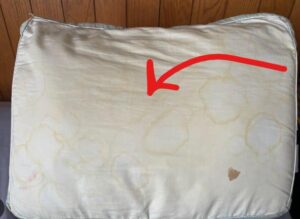
Pillows start fresh and bright, but it doesn’t take long for them to become discolored, with yellow spots that might leave you wondering if they’re dirty or just aged. This change, while common, can be a bit unsettling. So, what causes this yellowing, and how can you keep your pillows looking like new? Let’s explore the reasons behind pillow discoloration, ways to prevent it, and effective solutions for refreshing your bedding essentials.
The Science Behind the Yellow Stains
Even with regular pillowcase washing, pillows themselves absorb substances over time, leading to discoloration. The main culprits? Sweat, natural body oils, and skin products.
1. Sweat
Sweating is a natural bodily function, but during sleep, especially if you get warm or sleep without cooling sheets, sweat can accumulate on your pillow. Night after night, this sweat seeps into your pillow, contributing to those yellow stains. Interestingly, the average person loses around 500-700 milliliters of sweat each night, depending on factors like room temperature and personal comfort levels. Over time, this can cause pillows to turn yellow.
2. Natural Body Oils
Our skin produces oils even while we sleep. These oils are vital for keeping skin hydrated, but they can transfer onto your pillow. Unlike sweat, oils can leave more visible marks on your bedding, leading to deeper stains over time. If you use rich skincare products, these too can add to pillow discoloration.
3. Drool and Saliva
Many people occasionally drool during sleep. Saliva contains enzymes and bacteria that, when left on the pillow, can interact with natural fibers, causing color changes. While drooling might not be a nightly occurrence, even occasional instances can contribute to discoloration over time.
4. Makeup and Skincare Products
For those who wear makeup or use products like night creams, leaving these on can contribute to yellow stains. The residues can mix with oils and sweat, making the stains more difficult to remove and giving pillows a dull, yellowed appearance.
How to Prevent Pillow Yellowing
Now that we understand the causes, what can be done to keep your pillows looking fresh? Here are some practical tips to prevent pillow yellowing:
1. Use Protective Pillow Covers
One of the simplest solutions is to invest in high-quality, washable pillow protectors. These covers act as an extra barrier between your pillow and any sweat, oils, or saliva. Choose a breathable fabric that allows airflow while protecting against stains.
2. Wash Pillowcases Frequently
Changing your pillowcases at least once a week can make a noticeable difference. Pillowcases collect most of the oils, sweat, and skincare product residues, so regular washing can help prevent these from soaking into the pillow itself. Opt for fabric softeners and detergents that are gentle on fabric but effective at stain removal.
3. Avoid Applying Oily Products Before Bed
If possible, apply skincare products, especially oil-based ones, a bit earlier in the evening to allow time for absorption. This way, there’s less residue left to rub off on your pillowcase, keeping both your pillow and pillowcase cleaner for longer.
4. Keep Your Room Cool
Since sweat is a major contributor to pillow yellowing, a cool sleeping environment can help reduce sweating. Lower your thermostat, use a fan, or invest in cooling sheets and pillows to maintain a comfortable temperature.
Cleaning and Refreshing Yellowed Pillows
While prevention is ideal, sometimes stains happen anyway. Here’s a step-by-step guide to refresh and clean pillows that have already turned yellow.
Step 1: Check the Care Label
Different pillows are made from various materials—such as memory foam, down, or polyester. Be sure to follow the care instructions for your pillow type, as improper cleaning can lead to damage.
Step 2: Pre-Treat Stains
Use a gentle stain remover, or make a natural cleaning solution with baking soda and vinegar. Gently apply this to the yellowed areas and let it sit for about 15 minutes before washing.
Step 3: Wash with Hot Water
If your pillow is machine-washable, use the hottest water setting safe for the pillow. Adding a cup of baking soda or white vinegar to the wash can help lift stains and remove odors. If hand-washing, let the pillow soak in warm water mixed with a bit of gentle detergent before rinsing thoroughly.
Step 4: Dry Thoroughly
It’s essential to dry pillows completely to prevent mold and mildew growth. For machine-safe pillows, a tumble dryer set to low heat, with dryer balls or clean tennis balls, can help fluff the pillow while it dries.
When to Replace Your Pillow
While cleaning can improve the look and feel of pillows, they don’t last forever. Over time, pillows lose their structural integrity, affecting sleep quality. Most experts suggest replacing pillows every 1-2 years, depending on the material and condition. If your pillow remains lumpy or doesn’t regain shape after cleaning, it might be time to invest in a new one.
Embracing the ‘Yellow Pillow’ Phenomenon
The “Yellow Pillow” story, which went viral for highlighting the emotional connection people often feel toward their bedding, brings up an interesting point: for many, a slightly worn pillow offers comfort. Some see it as a testament to long, restful nights and familiarity. So, while there’s no harm in enjoying the lived-in feel of your pillow, these cleaning tips offer ways to keep it fresh and extend its lifespan.
Final Thoughts
Pillow yellowing is normal and manageable with the right care. By understanding the causes and taking preventive steps, you can keep your pillows looking and smelling fresh for years. So, whether you choose to embrace the natural wear or strive for spotless bedding, these tips can help you maintain better sleep hygiene and comfort. Happy sleeping!